
Holy Week Through the Lens of the Sower’s Vision
When you look at Holy Week through the parable of the sower, you see Jesus walking into a spiritually dry and resistant Jerusalem with the steady hope of a farmer who already imagines a rich harvest. He knows the ground is hard, rocky, and full of thorns, yet He steps in anyway, offering His own life so that a new creation can spring up even there.
During Lent, you may have heard the parable of the sower and pictured your own heart: at times distracted, at times shallow, at times tangled up in worry and the pull of comfort.
That is an honest way to hear it.
But pause for a moment and look at the bigger field. In the Gospels, especially in Holy Week, Jesus is not only speaking about individual hearts; He is walking into an entire city that, from every angle, appears to be hopeless soil.
Jerusalem is buzzing with religious activity, but there is little real fruit. The temple is crowded and busy, yet Jesus calls it a den of robbers. The leaders can quote Scripture, but they turn away from the Living Word standing right in front of them.
The same crowds who cry “Hosanna” on Sunday can be persuaded to shout “Crucify” by Friday. From the outside, it does not look at all like a field ready for a hundredfold harvest.
And still, the Sower looks at this city with a loving, determined vision.
Like any good farmer, Jesus clearly understands the obstacles. He knows there is a hard path where the evil one snatches away the word before it can sink in (think of Judas). He knows there are rocky places where people respond with quick enthusiasm and then lose heart when things get hard (think of the disciples scattering). He notices the thorns of power, comfort, and fear that tangle around the word and choke it (think of the chief priests and Pilate).
And yet, He still comes.
He does not go searching for “better soil” somewhere else. Instead, He chooses to plant Himself right in the middle of this unlikely ground. That is the picture Holy Week gives you: Jesus as the Sower who gently but firmly refuses to give up on difficult soil.
Early in the week, He speaks to a leafy but fruitless fig tree, acting out a parable that shows the difference between outward religion and a heart that is truly alive to God. Many commentators point out that a fig tree covered in leaves but without early figs is a sign that no real harvest is on the way; it is living on appearances only.
In a small, vivid picture, the fig tree stands for Jerusalem itself: plenty of religious “leaves,” but very little genuine repentance.
Soon after, He clears out the money changers and announces that the temple will not stand forever. He tells stories about vineyards that bear no crop, tenants who mistreat the servants and even kill the son, and a wedding banquet where the invited guests simply will not come.
Threaded through all these scenes is the same sobering message: the place God planted for good fruit has, for now, become barren ground; and yet Jesus is there, speaking, acting, and preparing the way for new life.
If Holy Week ended at this point, the story would seem to be only about judgment.
But judgment is not God’s final word. The Sower has come not just to inspect the field, but to transform it.
Jerusalem as Dry Ground and Jesus the Single Buried Seed
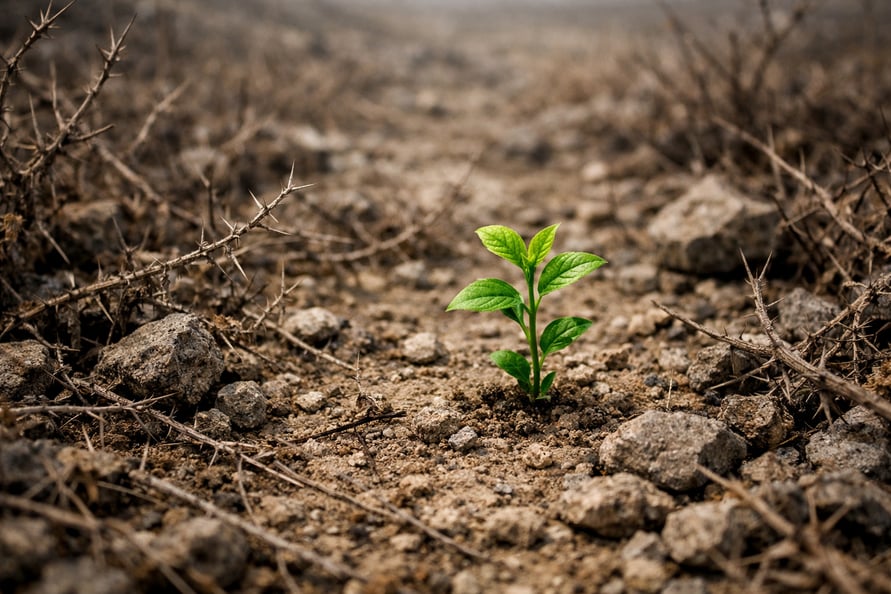
In Holy Week, Jesus becomes like a single kernel of wheat that falls into the ground and dies so that a beautiful harvest can rise up in the most unlikely place—Jerusalem, a city under judgment. He does not only talk about fruitfulness; He is willing to become “only the seed,” placed into the rock, so that new life can push its way up from underneath.
John’s Gospel does not include the parable of the sower, but it does give you one powerful picture from the world of farming that gathers all the others together. In John 12, just after His Palm Sunday entry, Jesus says, “Unless a kernel of wheat falls to the ground and dies, it remains only a single seed. But if it dies, it produces many seeds.”
Up to this point, Jesus has been planting the word like seed all across Galilee and Judea. Now, in Jerusalem, He is about to plant something infinitely more precious: His own life.
As you watch Holy Week unfold, notice how its details echo and turn inside out the earlier parables.
- The fig tree, full of leaves but without fruit, soon withers from the roots (Matthew 21:18–20). It becomes a living illustration of what happens when the word is received on the surface but never sinks in deeply. At the very same time, though, a barren, lifeless hill called Golgotha is becoming the surprising place where true and lasting fruit first begins to grow.
- In one of Jesus’ parables, the tenants throw the son out of the vineyard and kill him. During Holy Week, this picture comes to life as the Son is led outside the city and crucified, and it can seem, for a moment, as though this vineyard will never yield anything but harm.
- In Isaiah’s vineyard song (Isaiah 5), God carefully clears away the stones, plants the best vines, and yet still finds only wild, sour grapes. In Holy Week, the picture shifts: instead of removing the stones, God places His Son in a tomb carved into rock and rolls another stone across the entrance.
It almost leads you to ask: can any kind of harvest grow when a single seed is completely surrounded by rock?
Matthew tells us that when Jesus dies, a great earthquake shakes the ground, the rocks split, and tombs open. It is as though creation itself is answering that question. The old, stubborn ground begins to crack open from beneath, not because the surface looks better, but because the Seed has been buried there.
Other details show just how dry and upside‑down Jerusalem has become:
- The wine of Passover, which is meant to celebrate God’s saving work, grows increasingly bitter in the story. On Maundy Thursday, Jesus offers a cup and calls it “my blood of the covenant.” By the time He reaches the cross, that cup has become wine mixed with gall and then plain vinegar. It is a quiet, sobering picture: even the “fruit of the vine” is tasting the weight of what is going wrong, and setting the stage for what God is about to make new.
- Thorns, which Jesus once used as a picture of worries and worldly cares choking the word, are now shaped into a crown and placed on His head. It is as if the old promise from Genesis—“thorns and thistles”—has gathered itself up and come to rest fully on Him.
- He is struck with a reed, a dried-out stalk that once carried life-giving sap. It is another quiet reversal: something made to support growth is being misused, even as Jesus is opening the way to true life.
Put simply, Jesus is not planting His life in soil that is almost ready.
He has stepped into a field that has pushed back against God for generations and is now drying out. Peter feels shaken, like wheat being sifted. The disciples shrink back under pressure and questioning. For a moment, it looks as if the rocks, thorns, and birds from the parable are winning.
Yet even here, the Sower has a vision.
On the cross, Jesus hangs between two criminals, two “thorns” on either side, and right there, one of them is transformed into wheat. A person who can only whisper, “Remember me,” is gathered into the firstfruits of a harvest that is just beginning.
When that single Seed is laid in the rock‑hewn tomb, Matthew hints that more sowing is already underway: “the tombs of many holy people were opened.” It is as though the ground itself is starting to tremble like soil in a time‑lapse video, just before green shoots break through.
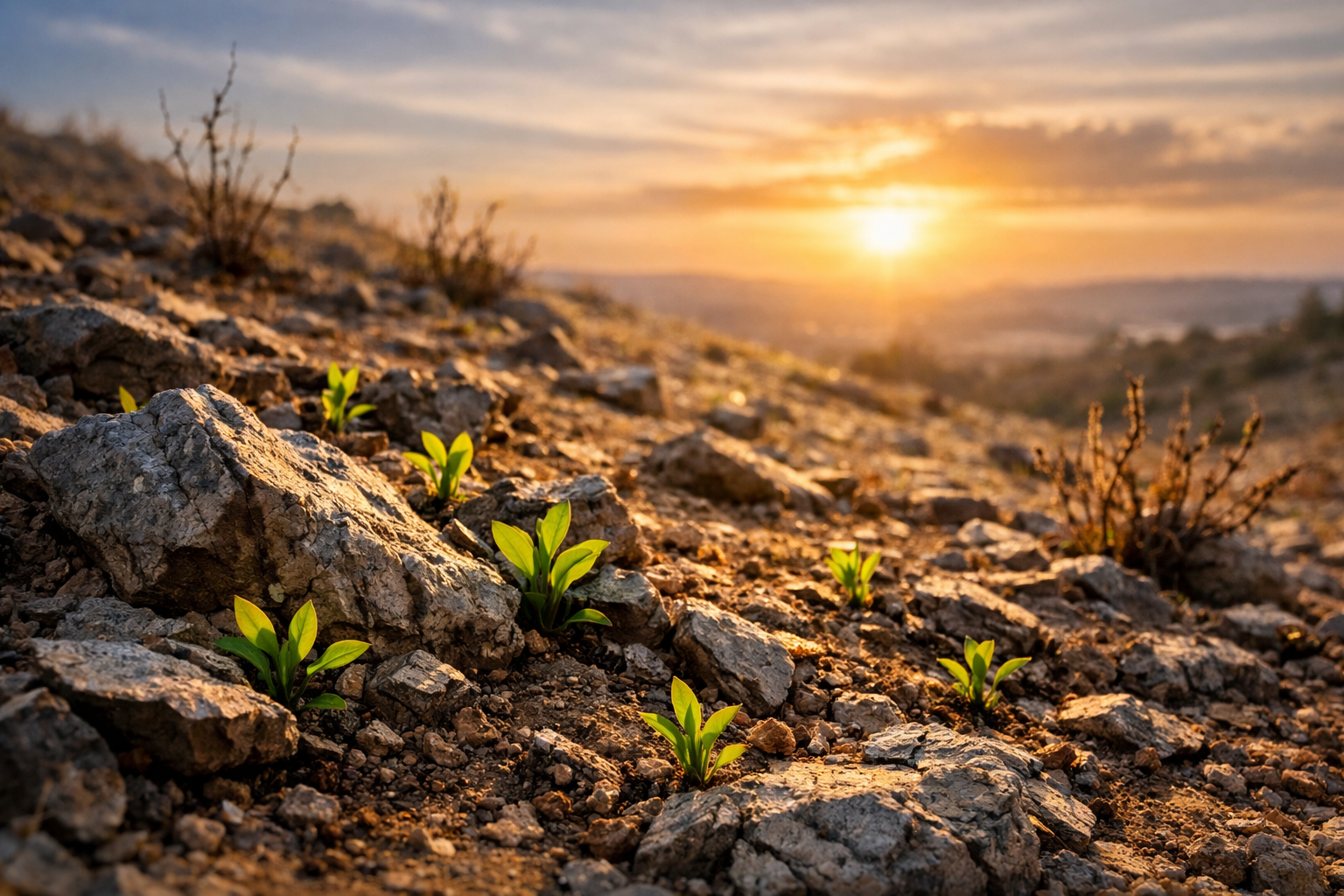
In all of this, Jesus also answers the hard question from the parable of the talents, where a servant fears his master as “a hard man, reaping where you did not sow.” In Holy Week, Jesus overturns that fear by becoming the One who both sows and is sown.
He does not reap where He has not sown; He offers Himself precisely in the places everyone else would have written off.
He is planted in solid rock to show you that even the most unlikely, “bad” field is never beyond the Sower’s loving vision.
What this Holy Week Harvest Means for Your Own Rocky Heart
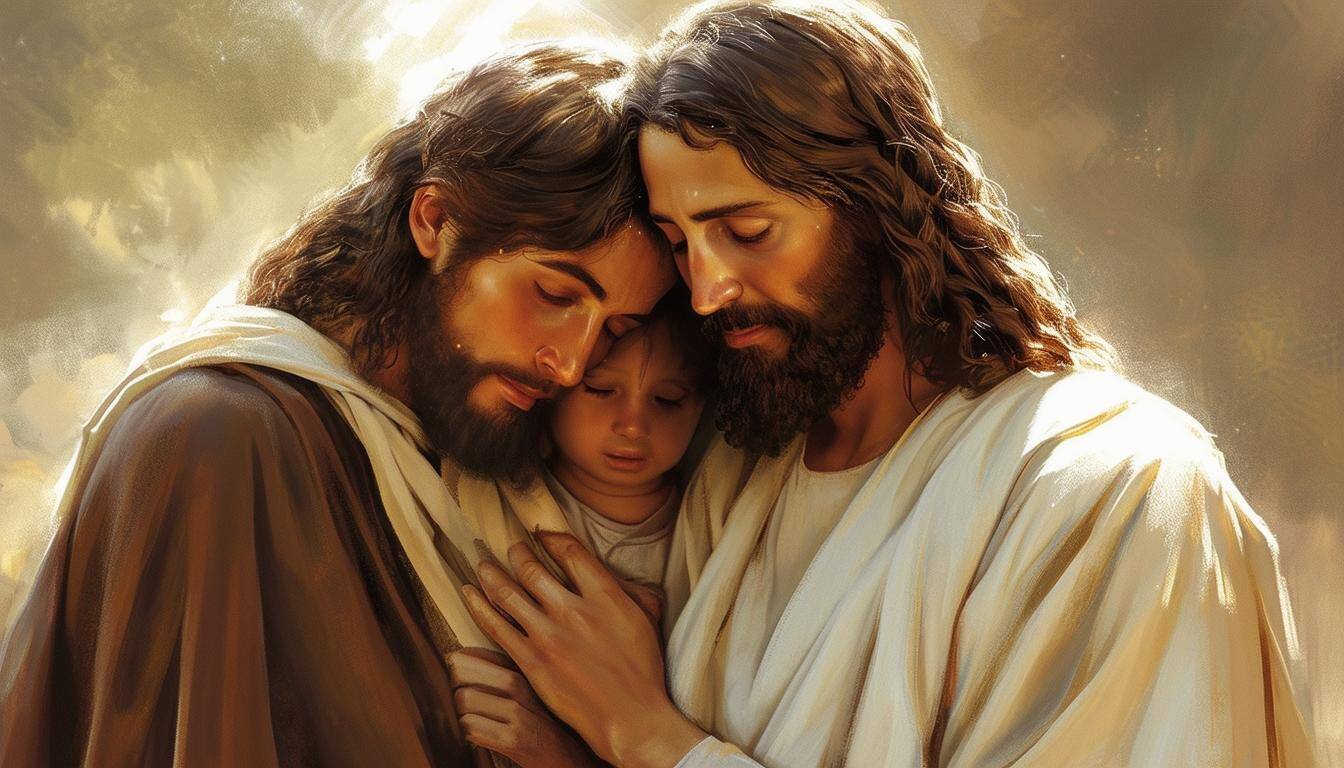
If Holy Week shows Jesus planting Himself in the very worst soil, then your own rocky, thorny, or seemingly barren heart is not ruled out of the harvest He has in mind. The very places you quietly think are “no fit place for the Son of God” are exactly the spots He walks toward, seed in hand.
When you hear the parable of the sower, it can easily sound like a spiritual performance review: check your soil, fix your distractions, deepen your roots, pull your weeds. There is some truth there; Jesus does call you to repent, to listen, to keep going.
But Holy Week adds a freeing truth: long before you manage a single change, the Sower has already chosen your field.
He is not surprised by:
- The hard path of habits you have walked for years and can’t imagine changing
- The rocky places where you start strong and then wither under pressure
- The thorns of anxiety, resentment, or addiction that choke out any good thing
He saw all of that in Jerusalem and walked in anyway. He sees all of that in you and moves toward you, not away.
So, how can you actually welcome Holy Week as good news when you feel like “bad soil”?
-
Name the empty places for what they are. The Gospels do not gloss over Jerusalem; they speak of fig trees without fruit, stones stacked into a temple that stifles praise, vineyards that are out of control.
In the same way, you do not honor Jesus by pretending your life is a thriving garden if it is not. Honest confession is not stepping outside the story; it is your way of stepping into it with Him. -
Let the Seed sink deeper than your own effort. In John 12, Jesus links the image of a grain of wheat to an invitation: “Whoever serves me must follow me; and where I am, my servant also will be.” Where is He in Holy Week? Laying down His life, being buried, and trusting the Father to raise Him up.
Following Him, then, is more than simply trying harder. It looks like saying yes to being “buried” with Him, releasing self‑protection and the old story that insists you are too far gone. Later, the apostle Paul will describe baptism in just this way: being “buried with Him… so that, just as Christ was raised, we too may live a new life.” -
Expect the hard places to start cracking from the inside out. If Holy Week is really true, the change God brings in your life will be more than a few surface adjustments. At times, it may feel like an inner earthquake, old certainties shaking, long‑standing defenses splitting, closed‑off places in you slowly opening.
That can feel like loss before it feels like life. But the pattern has already been set for you: first Good Friday and Holy Saturday, and then, in God’s time, Easter morning. -
Trust that even a little fruit matters. Jesus speaks of harvests of “a hundred, sixty, or thirtyfold.” Not every field produces the same amount, but all of it is real fruit.
If your life has felt dry for a long time, then one act of forgiveness, one simple habit of daily Scripture and prayer, one costly act of generosity already shows that the Seed is alive and the field is beginning to change. -
Listen for the Sower’s kindness instead of your own harsh verdicts. When you find yourself thinking, “My life is no fit place for the Son of God,” the whole story of Holy Week replies, “This is exactly the kind of place I had in mind.”
Jesus did not choose a peaceful countryside; He chose a city full of thorns, rocks, and enemies to show that no heart, no church, no community is beyond His loving reach.
The question Holy Week leaves with you is not, “Is my soil good enough?” but, “Will I let this Seed be planted here?” If your answer is even a shaky, whispering yes, then the Sower’s vision for you is so much more than just hanging on. It includes a harvest, thirty, sixty, a hundredfold, that only He could have imagined when He first walked into a dry, barren city, with palm branches under His feet and a cross waiting ahead.
Want to Hear More?
Listen to the full sermon by clicking on the video below.
Support the Mission
Help support the church's mission by clicking the Donate button below.