
When God Doesn’t Come in Time: John 11 and Your Story
When it feels like God is running late, John 11 reminds us that Jesus is still the resurrection and the life. Sometimes he allows us to face the very things we fear most, and even there, we can come to know him more deeply.
That doesn’t make the pain easy, but it gives us hope; even when death has written a chapter, Jesus isn’t finished with the story.
John places the story of Lazarus near the end of his “book of signs," the miracles that help us see who Jesus is. This sign points ahead to Jesus’ own cross and empty tomb.
But first, we face something hard to understand: Jesus chooses to wait, and Lazarus dies.
Many of us quietly assume, “God loves this person, and they need help, so surely he’ll step in the way I hope.” When that doesn’t happen, it can leave us hurting and unsure of what to believe.
That’s a hurt many of us find hard to put into words. Maybe you prayed for healing, kept showing up at church, and did your best to trust, and still, someone you loved died.
In that grief, it can be hard to question what we expected God to do without questioning his love too. “Did God really love them? Does he really love me?”
If those questions sound familiar, you’re not alone, and you don’t have to hide them.
John doesn’t soften the fact that this is hard to understand. Jesus tells his disciples, “Lazarus is dead, and for your sake I am glad I was not there… so that you may believe” (John 11:14–15).
Those words can be difficult to hear. Jesus deeply loves this family, yet he allows the very loss they hoped he would prevent.
This miracle doesn’t ask us to skip over grief or pretend it doesn’t hurt. Instead, it invites us to discover hope in Jesus right in the middle of it.
Two Sisters, One Sentence: “Lord, If You Had Been Here…”
Both Martha and Mary greet Jesus with the same sentence: “Lord, if you had been here, my brother would not have died” (John 11:21, 32).
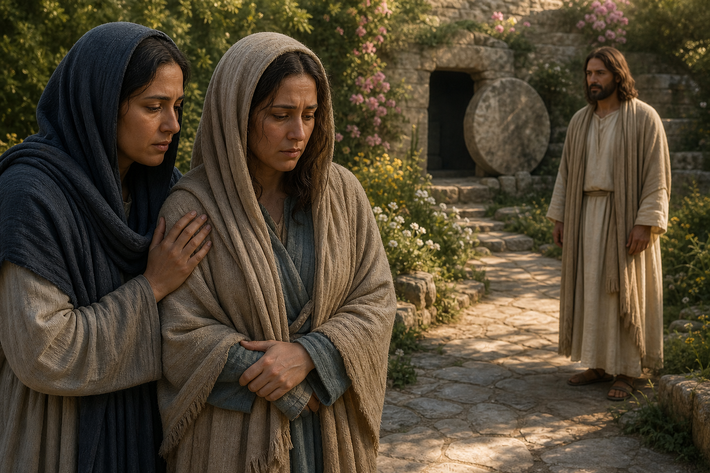
The same words can be prayed in very different tones, either to excuse God or to put God on trial.
Sometimes we try to explain away our disappointment: “If you’d been here, things would have been different. But maybe you were busy or far away. It’s easier not to think about it.”
That can feel like a way to get through the hardest days of grief. But setting our questions aside doesn’t make them disappear. We can bring them honestly to God, even when we don’t know what to say.
The other tone makes us the judge: “If you had loved us, you would have done what I expected. You owe me an explanation.”
Many of us move back and forth between these responses, trying to explain away our disappointment one day and feeling that God owes us an answer the next.
If you recognize yourself here, you’re not alone. Grief can leave us struggling to trust God when his ways don’t match our hopes.
Notice how Jesus meets Martha. She holds on to a promise she knows: “I know he will rise again in the resurrection on the last day” (11:24). That hope is real, but its fulfillment still feels far away.
Jesus invites her to see that the source of her hope is standing right in front of her: “I am the resurrection and the life… Do you believe this?” (11:25–26). He isn’t simply asking her to give the right answer. He’s inviting her to trust him with her brother’s story, even in the middle of her grief.
Jesus Weeps Before He Calls Lazarus From the Tomb
Before Jesus calls Lazarus from the tomb, John shares two simple words: “Jesus wept” (John 11:35). Jesus, who is the resurrection and the life, stands near the tomb and cries with the sisters he loves.
He doesn’t rush past their sadness. He shares it.
Jesus is not a detached miracle-worker calmly executing a plan; he is the God who lets our grief move him.
As one reflection from Luther Seminary’s Working Preacher notes, this story never really answers why Jesus delays. Instead, it points us to his love, a love that remains even when he feels far away and becomes clear when he weeps alongside those who grieve.
Grief research offers a helpful connection to Martha and Mary’s experience. The American Psychological Association recognizes that losing someone can bring “spiritual struggle,” questions about God, life’s meaning, and why things happen.
One review of bereavement research describes how anger, confusion, and honest cries to God can be part of working through loss. If you’re wrestling with your faith while you grieve, that doesn’t mean you’ve failed at believing.
You can bring your sorrow and your questions to God.

Think of the last time you were with someone in deep sorrow. Perhaps you felt the pressure to say the right theological sentence, to rescue the moment with explanations.
But in John 11, Jesus shows us the kindness of simply sharing someone’s tears.
Sometimes loving like Jesus means sitting beside a friend, listening quietly, and letting yourself cry with them. You don’t have to have all the answers to help someone feel less alone.
So, if you find yourself at a graveside wondering whether God cares, let John 11 remind you of Jesus’ tears. He isn’t distant from your pain. He draws close and shares your sorrow, without brushing it aside or offering easy answers.
And the same Jesus who weeps with us speaks with a power greater than death, giving us hope even in our grief.
What Resurrection Hope Really Promises (and What It Doesn’t)
When Jesus cries, “Lazarus, come out!” and a man dead four days stumbles from the tomb (John 11:43–44), it is tempting to treat this as a guarantee that God will always give us our Lazarus back now.
But John is far too honest for that.
New Testament scholar D. A. Carson reminds us that Lazarus returned to a life like ours, one that would still end in death. This miracle doesn’t promise that Jesus will undo every loss we face today.
Instead, it shows us something greater: even death is under his authority.
John explains why he shares these signs: “that you may believe that Jesus is the Messiah… and that by believing you may have life in his name” (John 20:31). Our hope rests in Jesus himself and the life he gives.
Paul points us to this same hope in 1 Corinthians 15. If our hope in Christ were only for this life, he says, “we are of all people most to be pitied” (15:19).
But Jesus promises more.
Our bodies are “sown in weakness” and will be “raised in power,” no longer subject to decay or death (15:42–44). Revelation 7 gives us another beautiful picture of that hope: “a great multitude that no one could count” gathered before the Lamb, with God wiping away every tear.
Resurrection hope doesn’t mean we won’t face illness, say painful goodbyes, or grieve someone we love. It means that death won’t have the final word.
Even when we don’t receive a miracle like Lazarus’s, we can hold on to the promise his story points toward: Jesus will one day raise our fragile bodies in glory, free from decay and death. Our sorrow is real, but it isn’t the end of our story.
Walking With Doubters (Including Yourself) After a Loss
Maybe you’re supporting someone who is struggling to trust God after losing a loved one. Or perhaps you’re the one carrying those questions. John 11 shows us how to walk alongside one another with patience and compassion, making room for honest doubts without shame and taking those questions seriously.

If loss has left you wrestling with faith, you’re not alone. Grief specialists recognize that spiritual struggles are common. A U.S. study of 3,953 college students linked religious doubt with greater distress, but also with openness and a deeper search for meaning.
Another study, published in Death Studies, followed 168 recently bereaved Christians and found that commitment to faith and practices such as prayer were associated with greater long-term well-being in their Christian lives, even while grief and questions remained.
These findings offer a reassuring reminder: faith and sorrow can exist side by side.
Those findings simply echo what Scripture already shows us. Thomas in this very chapter says grimly, “Let us also go, that we may die with him” (John 11:16). Later, in John 20, he struggles to believe that Jesus has risen without seeing him for himself.
Jesus doesn’t turn Thomas away. He meets him in his doubts and invites him to believe, a hopeful reminder for us when trust feels hard.
So how can we support someone who is wrestling with doubt?
We start by acknowledging how much the loss hurts and listening to their questions without judgment. With patience and love, we keep pointing one another back to Jesus, the One who loved Lazarus, wept with his family, and called him from the tomb.
This same Jesus rose from the dead himself, giving us a hope stronger than our doubts, even when those doubts don’t disappear overnight.
Hearing Jesus Ask, “Do You Believe This?”
At the heart of John 11 is a personal invitation to trust Jesus. After saying, “I am the resurrection and the life,” he asks Martha, “Do you believe this?” (John 11:25–26). It’s a question that invites us to pause and reflect, too.
The series this fall at New Covenant, This I Believe, has been leading us toward this moment, not just learning about Jesus, but trusting him with our own lives.
In the video sermon that goes with this article, we take time to explore that question together. We look at how Lazarus’s story connects with John’s other signs and points ahead to Jesus’ own suffering, death, and resurrection.
If you’re working through doubts or supporting someone who is, we invite you to take some time to watch the sermon. There’s room to bring your questions as you reflect on the whole story: Jesus’ delay, his tears, his call to Lazarus, the grave clothes, and the plot against him that follows.
Our prayer is that, as you hear the good news, you’ll find comfort and hope in the risen Jesus, who draws near and invites you to trust him: “Do you believe this?”
Like this Article? Share it!


Support the Mission
If you found this article helpful, please consider supporting the mission so we can continue writing these articles to help others who are looking for answers. Thank you!