
Bring Your Doubts to Jesus
If you’ve ever felt nervous about sharing your doubts or questions about Christianity, you’re not alone. But you don’t have to hide those questions from Jesus. He doesn’t turn away; He welcomes you and draws near.
In John’s Gospel, we see Him patiently meeting people in their fears and helping them discover they can trust Him. You don’t have to have it all figured out. He invites you to come as you are, questions and all.
Many of us secretly assume the opposite. We think, “If I were a real Christian, I wouldn’t struggle with this,” so we either bury our questions or let them harden into quiet cynicism.
The Gospel of John tells a different story. Over and over, Jesus walks straight into people’s confusion, pain, and hesitations.
Throughout John’s Gospel, we see Jesus turn water into wine at a village wedding, feed 5,000 hungry people with one boy’s lunch, walk on stormy water, give sight to a man born blind, and call Lazarus out of the tomb.
Each of these miracles, or “signs,” helps us see who He is and how deeply He cares. Our doubts don’t overwhelm Him. We can bring them to Him, trusting that He is strong enough to help us through them.
Why Some Doubt Is Honest, and Even Helpful
Not all doubt is the enemy of faith. Sometimes doubt is simple wisdom. When a TV commercial promises the world if you just buy one more product, that little hesitation can save your money and your disappointment.
Sometimes doubt gives us a helpful moment to pause and ask, “Is this true? Is this good? Can I trust this person?” It encourages us to think carefully about what we hear, ask questions of those we look to for guidance, and remember that we all have more to learn.

Doubt can be part of growing in faith, a place we pass through as we learn to trust, rather than somewhere we have to stay.
Psychologist James Fowler, who studied how faith grows over a lifetime, observed that people often have to let go of childish pictures of God, like “Santa in the sky who fixes everything instantly,” before they can trust the real, living God revealed in Jesus.
That process can feel like doubt, but it’s actually growth.
The key question is not, “Do I ever doubt?” The question is, “Where do I take my doubts?” John’s Gospel invites you to carry them straight to Christ.
How John’s Signs Lead Doubters Toward Trust
John doesn’t just tell us Jesus is trustworthy; he shows us through a carefully chosen set of signs. At the wedding in Cana, Jesus turns water into wine, and barely anyone knows He did it.
The miracle is hidden, quiet, like a whisper of glory.
By the time we reach Lazarus’s funeral, Jesus is standing in full daylight, publicly declaring, “I am the resurrection and the life.”
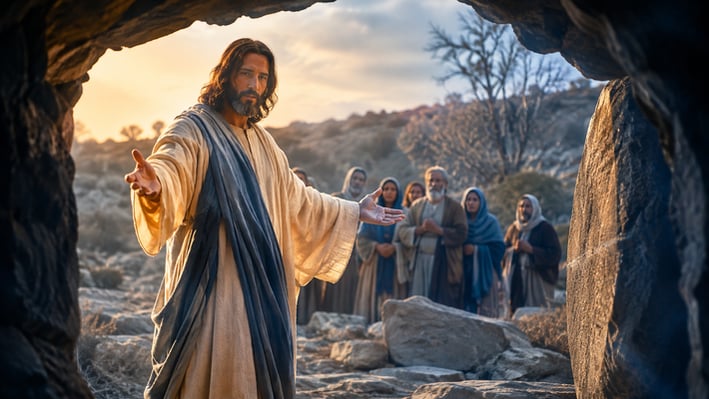
Along the way, we see Jesus clear the temple and heal an official’s dying son without even being there. He helps a man who has spent years waiting beside a pool, feeds thousands with bread and fish, walks across stormy waters, and gives sight to a man who has been blind since birth.
With each sign, Jesus meets people in the fears we all recognize: not having enough, facing pain or illness, struggling to see God clearly, and even facing death.
Each scene meets a different kind of question:
- Will there be enough? He feeds the crowd.
- Does God see my suffering? He heals the forgotten.
- Is death the end? He calls Lazarus out of the grave.
A group of Christian leaders in India once brought these signs to life by acting them out together. After each scene, a different leader stepped forward to invite people to trust Jesus, asking, “You have seen what Christ has done. Why don’t you believe in Him?”
That invitation gets to the heart of why John shares these stories.
As he writes, these signs are recorded “so that you may believe that Jesus is the Messiah, the Son of God…and that by believing you may have life in his name.” These aren’t just remarkable stories to hear; they’re an invitation to know Jesus and discover life in Him.
If you’re wrestling with doubt, John points you to more than an explanation; he points you to Jesus. Each sign helps you get to know Him better and see why you can trust Him.
What Really Happened Between Jesus and Thomas
That brings us to Thomas. After the resurrection, the other disciples tell him, “We have seen the Lord!” Thomas, still reeling from grief and confusion, draws a line in the sand: “Unless I see the nail marks in his hands and put my finger where the nails were… I will not believe.”
Maybe you recognize something of yourself in Thomas’s words: “Unless God fixes this… Unless I get an answer… I’m not sure I can believe.” Sometimes doubt takes that shape; we feel we need something to change or make sense before we can trust.
If that sounds familiar, you’re not alone.
A week later, the disciples are gathered again behind locked doors. Suddenly Jesus stands among them and says, “Peace be with you.” Then He turns directly to Thomas. He repeats Thomas’s own words back to him, almost line for line: “Put your finger here; see my hands. Reach out your hand and put it into my side.”
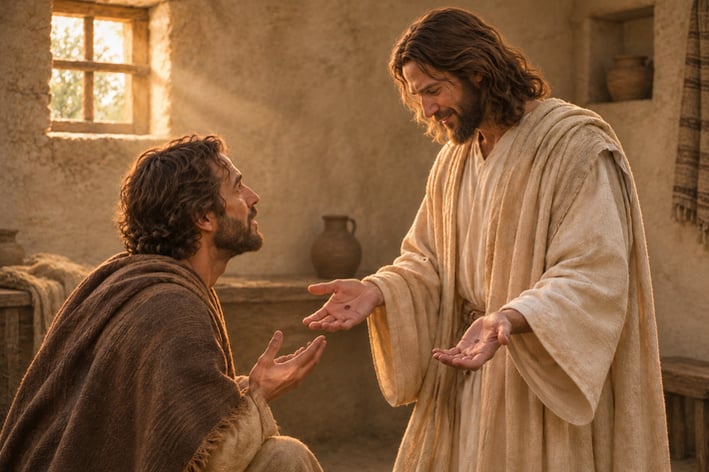
Notice what Jesus does not do. He doesn’t scold Thomas for asking too much. He doesn’t say, “Real disciples don’t doubt.” He doesn’t send him away to figure it out on his own.
Instead, He offers His own wounded body as the answer.
Then Jesus gives a command that gathers up everything Thomas has seen since the first day he followed Him: “Stop doubting and believe.” He is not saying, “Stop feeling. Stop asking.” He is saying, “Thomas, you have Me. You’ve seen My life, My cross, My empty tomb. You can trust Me now.”
Thomas responds with one of the clearest confessions in the New Testament: “My Lord and my God!”
From Stuck in Doubt to Walking in Faith Today
Thomas’s faith didn’t begin in that moment; it grew through all the time he had spent with Jesus, through conversations, miracles, and teachings that weren’t always easy to understand.
Your faith can grow that way, too. You don’t have to have every question answered before you take a step toward Him. As you get to know Jesus, you can learn to trust Him, even with questions still on your heart.
That means you can be honest about what hurts, whether it’s suffering, the ways the church has let you down, or teachings you find hard to understand.
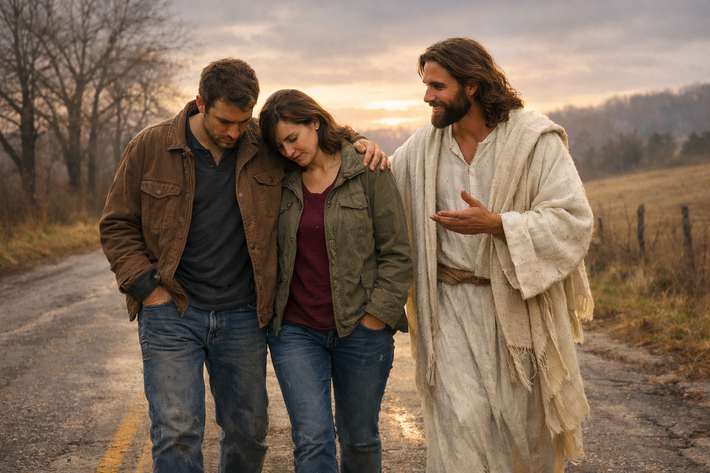
John’s Gospel doesn’t shy away from these struggles, either. We meet people living with ongoing illness, grieving at a friend’s tomb, walking away because Jesus’ words are difficult to accept, and hiding behind locked doors in fear.
If any of that feels familiar, you’re not alone, and you don’t have to hide it from Jesus.
A reflection in Christianity Today on this resurrection scene points to a struggle many people may recognize: it can feel easier to admire Jesus as an inspiring teacher than to trust Him as the risen Lord who is with us today. We may have questions about the church, too.
Yet the scene offers hope: Jesus meets His frightened disciples where they are, speaks peace to them, and breathes on them as He invites them to receive the Holy Spirit. Their fear doesn’t keep Him away.
So what does it look like to move from stuck doubt toward walking faith?
- Talk openly with Jesus about your questions and doubts, trusting that He welcomes you as you are.
- Get to know Jesus through Scripture, letting His words and actions deepen your understanding of who He is.
- Stay connected to a caring community that welcomes your questions and helps you keep turning to Jesus, even when faith feels uncertain.
The goal is not to become a person who never doubts, but a person who knows where to go when doubt rises.
Your Next Step
If you are:
- Tired of pretending you don’t have questions,
- Afraid that your doubts have already put you beyond Jesus’ patience,
- Or simply hungry to see Him more clearly,
then watching this sermon may be the step you need. As you watch, ask Him to show Himself to you. Not a softer version of Christianity, not a vague spiritual idea, but the crucified and risen Lord who still bears scars and still welcomes questioning hearts.
That is where life in His name begins.
Like this Article? Share it!


Support the Mission
If you found this article helpful, please consider supporting the mission so we can continue writing these articles to help others who are looking for answers. Thank you!