
Easter in Action When You Feel Like an Exile
Easter in action means the risen life of Jesus meets you right where you feel scattered, unseen, or out of place, and gently begins to reshape how you understand your identity, your relationships, and even your suffering, so you can live as someone already held, chosen, and sent by the risen Christ.
Many of us can relate to the Christians Peter wrote to, feeling like "exiles" and "foreigners" right in our own neighborhoods, workplaces, and sometimes even in our own families. You might walk into a meeting, a classroom, or a gathering and quietly think, "No one here believes what I believe."
That feeling of being alone really matters; Peter takes it seriously, mentioning it again and again (1 Peter 1:1, 1:17, 2:11, 5:13).

Peter wants us to see that Easter was never meant to stay tucked away in Jerusalem or in the first century. Because Jesus has been raised, we now live, as one preacher warmly puts it, "in the last times," a season when God’s new creation has already begun in Christ and is quietly spreading through His people.
So an Easter faith is not just looking back with fondness at an empty tomb; it is the Spirit-given courage to live as a different people in places that seem to have "never heard of Easter."
Those who study Scripture point out that Peter’s words, "elect exiles" and "scattered," come from Israel’s story and are now applied to everyday Gentile believers, people who, if they had been there, might even have stood with the Romans (1 Peter 2 commentary).
In other words, your story, even in Winter Springs in 2026, can be gathered up into God’s bigger story of bringing together a people from every corner of the earth.
Coming to the Living Stone When You Feel Rejected
Peter invites scattered believers, "Come to him, a living stone, rejected by mortals yet chosen and precious in God’s sight" (1 Peter 2:4). This is Easter in a single sentence: the One the world cast aside has been raised and lifted up by God as the cornerstone of a whole new creation.
If you have ever been passed over, ignored, or pushed to the edges because of your faith, or because of your weakness, Jesus understands that from the inside. Crucifixion was Rome’s harsh way of saying, "You are irrelevant. You do not belong."
Yet God chose that rejected Stone and made Him the solid foundation of everything that will truly last.
The picture Peter uses is that of a building project. Builders in the ancient world would carefully choose one main stone, set it in place first, and then line up every other stone with it. If Christ is that cornerstone, then "coming to Him" means choosing, day by day, to let your life be aligned not with popularity, comfort, or approval, but with the crucified and risen Lord.
There is a real cost to this. When you line your life up with the rejected Stone, you may feel growing tension with the world around you. You might be misunderstood at work, laughed at in your family, or brushed off online. Yet Peter reminds us that God’s word over you, "chosen and precious" in His sight, can become more solid and reassuring than any human rejection.
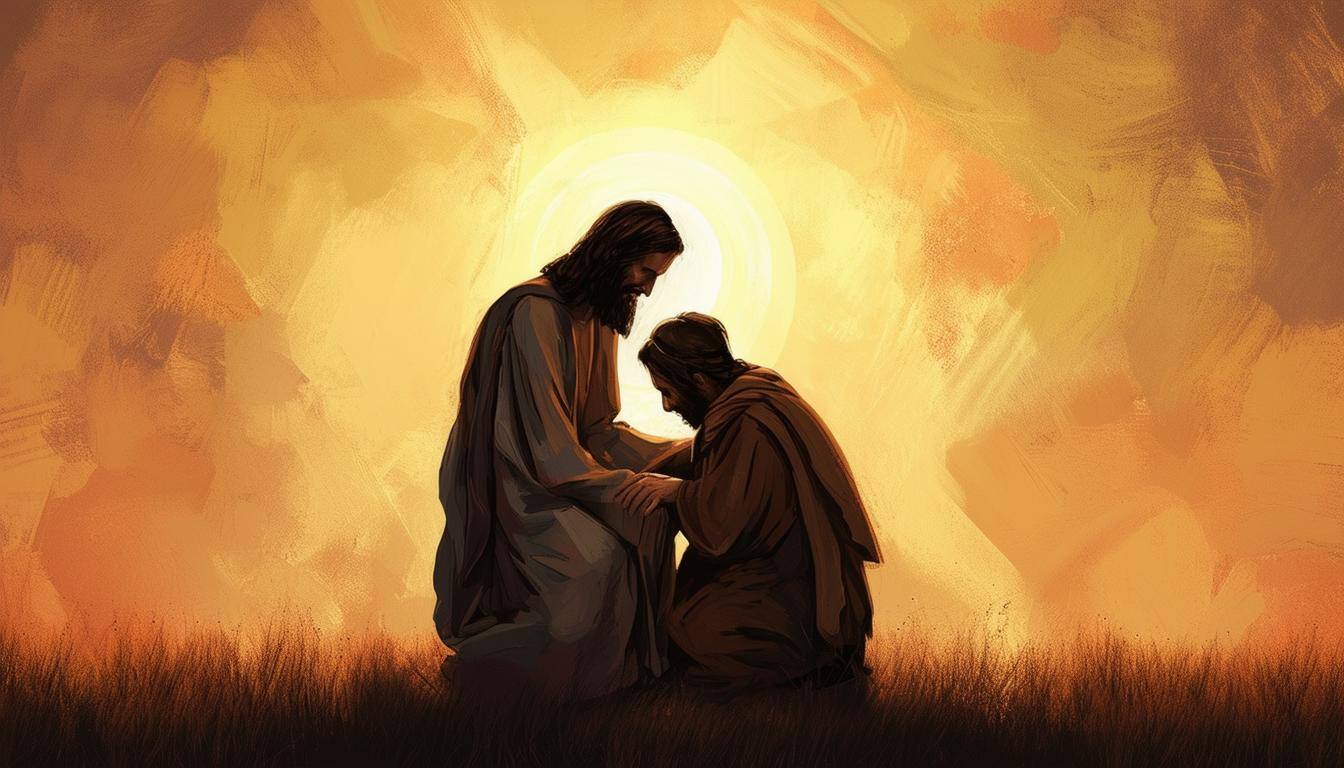
Letting God Build You as a Living Stone
Peter does not say, "Pull yourself up onto God’s wall." Instead, he says, "Like living stones, let yourselves be built into a spiritual house, to be a holy priesthood" (1 Peter 2:5). The good news is that the weight is not on you to climb; the grace is that the Master Builder is the One who lifts you and gently sets you in place.
This really matters when your life feels scattered—your schedule, your responsibilities, your emotions, even your faith. The first readers of 1 Peter lived under external persecution and inner stress. Today, many face different but very real weights: financial strain, family tension, chronic illness, and hidden addictions.
The promise of Easter is not that you suddenly become strong enough to fix everything, but that the risen Christ is already at work, gently and quietly fitting each piece of your story into His larger, loving house.
Those who study Scripture note that Peter is drawing on the image of the temple here: God is building a new home, not out of stone blocks in Jerusalem, but out of people who are joined to Christ by faith ("Living Stones" exposition). That means your Monday morning cubicle, your kitchen table, or your dorm room can become a quiet place where God’s presence is seen.
To "let yourself be built" is both a surrender and a heartfelt desire. It sounds like praying, "Lord, I want my habits, my time, my relationships, and even my wounds to be shaped by Christ." Even that simple longing to be aligned with Him is already a sign that God is moving you into place.

Receiving a New Identity: Chosen, Royal, God’s Own People
Then comes the surprise. To Gentiles who had never stood in Israel’s temple, Peter says, “You are a chosen race, a royal priesthood, a holy nation, God’s own people” (1 Peter 2:9). Words once reserved for Israel are now spoken over people who had felt like outsiders.
If you feel like an outsider, at school, at work, or even in your own home, Peter is giving you words to speak over your life. In Christ, you are not "irrelevant" or "second string"; you are chosen. You are not stuck on the sidelines; you are a royal priest, invited to stand between God and a hurting world in prayer and loving witness.
You are not rootless; you belong to a holy nation that stretches across time and all borders.
Peter reaches back to the prophet Hosea, where God spoke to a hurting people: "Once you were not a people, but now you are God’s people; once you had not received mercy, but now you have received mercy." The child once named "No Mercy" is renamed "Beloved." That same God is still in the business of renaming people today.
Think of someone in your life who seems far from faith, "not a people" and "no mercy" in every visible way. Easter reminds us that their story is not finished. The same mercy that reached you can reach them. Part of your calling as God’s beloved person is to hold their name before the Lord and be ready, with quiet humility, to share the hope that has taken hold of your life.

Carrying Easter into Unfair and Asymmetrical Situations
Peter is very honest about suffering, and we can be too. He talks about deeply uneven situations: unjust governments, harsh masters, marriages where only one spouse believes, communities that are unfriendly toward Christian faith.
He acknowledges that some believers really will face injustice and pain.
Yet Peter dares to say that Easter in action can reach even into those hard places. The same Spirit who strengthened Jesus to walk through Good Friday can strengthen His people to step into dark situations without giving in to hate, revenge, or despair.
When we suffer for doing wrong, we simply echo the world’s story; when we suffer for doing what is right, our lives quietly point to another Kingdom.
This does not minimize or excuse abuse, injustice, or sin. Scripture is clear that those who misuse power will answer to a righteous God. There are times when the right and wise step is to seek help, set firm boundaries, or even leave a dangerous situation.
At the same time, Peter invites us to notice that there are places, at work, in government, in family life, where we cannot quickly change the systems, yet we can still enter them with a different, Christ-shaped spirit.
Think of a Christian employee working under an unfair supervisor, or a believer in a family where faith is openly mocked at every holiday meal. In those moments, Easter in action looks like refusing to copy cruelty, choosing to keep doing what is right, praying for those who hurt you, and trusting that God can let His light break through even in the hardest places.

Learning to Crave Spiritual Milk When Suffering Feels Endless
None of this can be sustained just by trying harder. Peter begins this whole section by saying, "Like newborn infants, long for the pure spiritual milk, so that by it you may grow into salvation" (1 Peter 2:2). The longer you stand in hard places, the more your heart will need the steady nourishment of the gospel.
Notice how Peter reasons with us: you hunger for this nourishment because you have already "tasted that the Lord is good" (1 Peter 2:3). You can look back over your life and remember moments, big or small, when Christ met you: a verse that steadied you, a friend’s unexpected kindness, a prayer answered in a way you never saw coming.
Calling His goodness to mind refreshes your heart even as His truth gently renews your mind.
Practically, this looks like building small, simple habits that keep you close to the Cornerstone. Take time to read 1 Peter slowly this week. Pray honestly about the specific place where you feel "surrounded by darkness." Reach out to another believer and ask them to pray with you that Easter would "break in" right there.
And then, very simply, keep coming back to Jesus.
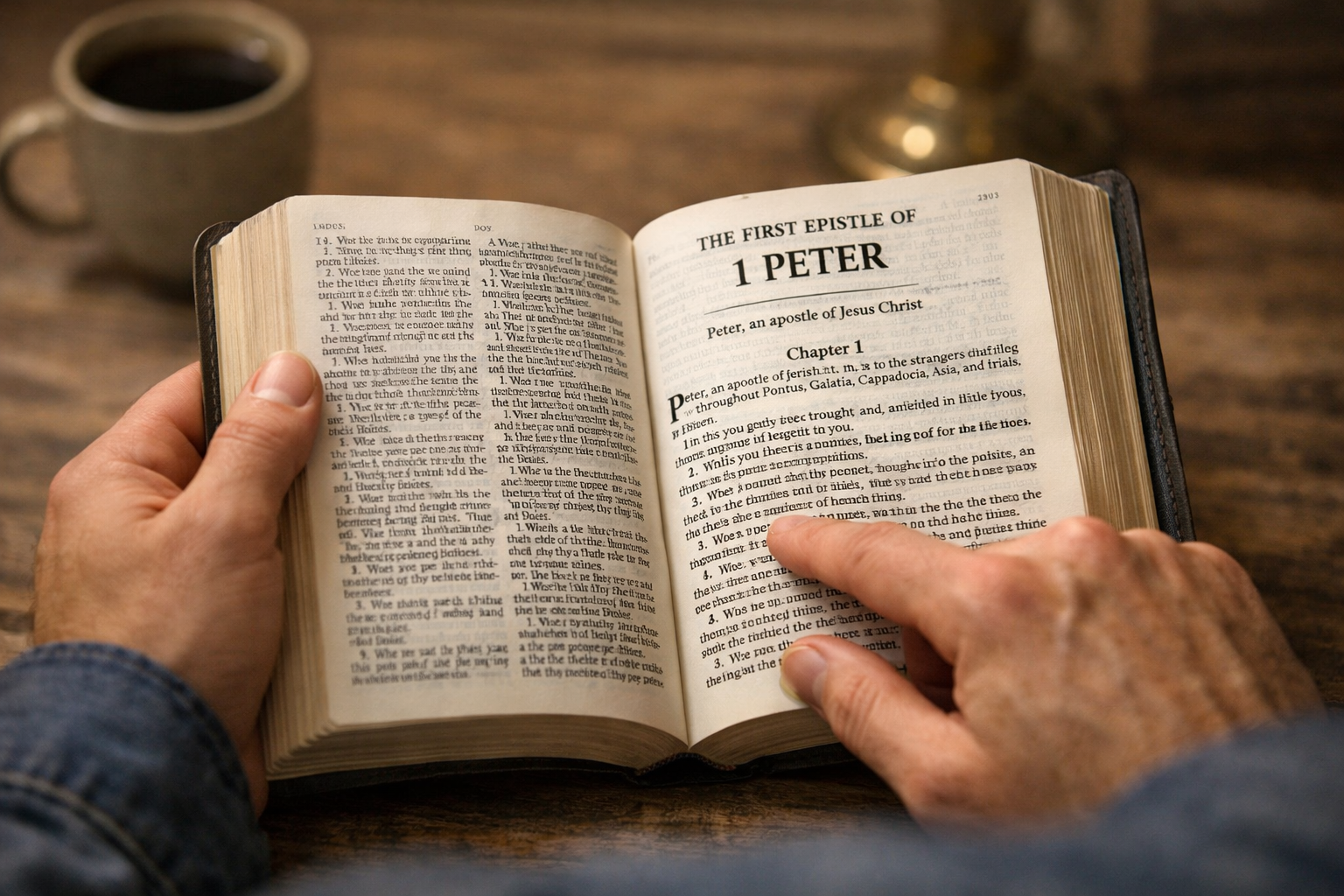
If this connects with where you are right now, the full sermon walks through these themes and gives space to listen, pray, and respond. Sometime this week, set aside a moment to watch the sermon from New Covenant Church’s Easter season series, and ask the risen Christ to show you what Easter in action looks like in the hardest place in your life today.
Support the Mission
Help support the church's mission by clicking the Donate button below.