
Why John Wrote His Gospel
The Gospel of John was written to help you see who Jesus really is, trust Him, and begin to experience the true life found in His name. John carefully selected a few of Jesus’ signs, like turning water into wine and raising Lazarus, so that people with real questions and shaky faith could come to know Him with deeper trust and confidence.
Near the end of his book, John pulls back the curtain and tells us exactly what he’s doing. In John 20:30–31 he writes, “Jesus performed many other signs in the presence of his disciples, which are not recorded in this book. But these are written that you may believe that Jesus is the Messiah, the Son of God, and that by believing you may have life in his name.”
Think about that for a moment. John is not trying to give us a full biography of Jesus. He knows he is being selective. In fact, he says that if everything Jesus did were written down, the whole world wouldn’t have room for all the books.
Instead, John is carefully sharing the stories that matter most for one clear reason: to lead you to Jesus and into life.
That means every part of John’s Gospel, every conversation, every sign, even the longer chapters you may feel tempted to skim, has been carefully chosen to show you something important about who Jesus is and about the life He offers you right now.
What John 20:30–31 Reveals About Jesus
John’s purpose is wonderfully simple and deeply personal.
First, he wants you to believe that Jesus is the Messiah and the Son of God. Second, he wants that belief to lead you into life—real, experiential, walk‑around life—in Jesus’ name.
In John’s Gospel, believing is not just agreeing with a set of facts; it is learning to trust a living Savior.

“Messiah” means the Anointed One, the long-awaited Savior who steps into Israel’s story to fulfill God’s promises. John wants you to see that Jesus is the One the prophets had been pointing to all along: filled with the Spirit, bringing new creation, healing what is broken, and finishing what was left incomplete in Israel’s story.
Every sign John includes is meant to point you to that mission. But Jesus is not only God’s servant; He is also the Son of God.
As you read John’s Gospel, it keeps inviting you to ask, “What does this show me about Jesus as God’s own Son?” When Jesus turns water into wine, heals from a distance, feeds thousands, walks on water, opens blind eyes, and calls a dead man out of the tomb, John is doing more than saying, “Look how powerful Jesus is.”
He is helping you see who Jesus really is.
That is why John calls for a personal response: “that you may believe.” As you move through each chapter, the question comes back again and again: Do I believe this about Jesus?
And if I do, what would it look like to trust Him with my real, everyday life?
When Faith Feels Weak: John’s Gospel for Doubters
Many people secretly fear that they don’t have “enough faith” for God to work in their lives. Earlier Gospels like Matthew, Mark, and Luke often show faith as something people bring to Jesus first: “According to your faith be it done to you.”
That emphasis is true and important, but John highlights another side of the story.
In John’s Gospel, faith often grows after Jesus has revealed Himself. He acts, He speaks, He gives a sign, and then people begin to believe.
At Cana, Jesus turns water into wine, and “His disciples believed in Him.” In John 4, a desperate father trusts Jesus’ word about his son’s healing and later finds out the miracle happened at that very hour, and “he and his whole household believed.”
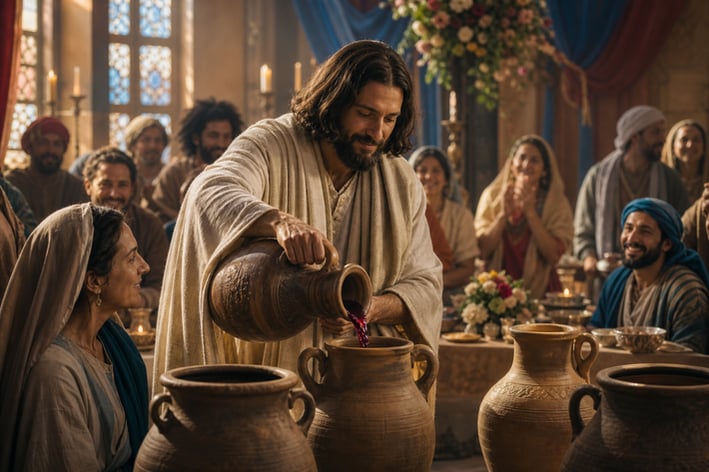
Again and again, the sign becomes the spark that awakens faith.
This is incredibly good news if you feel like your tank is half‑empty. In fact, one study from the Barna Group found that about 65% of Christians have gone through a season of spiritual doubt at some point in their lives. Barna
John writes for people exactly like that.
You don’t have to come to Jesus with perfect confidence. You can come with questions, with hurt, or with a faith that feels stretched by the complexity of life. John invites you to come to Jesus just as you are and let faith begin to grow as He shows you who He is.
Signs That Point Beyond Miracles to Real Life
John loves the word “signs.” He does not simply call these moments miracles, because they are meant to point beyond themselves. A sign is never the destination; it is meant to lead you to something greater.
That is why John’s Gospel is often described in two parts: the “Book of Signs” (roughly chapters 1–12) and the “Book of Glory” (chapters 13–21). In that first section, John walks us through seven major signs that help us see more clearly who Jesus is and what He came to do.
Those signs include turning water into wine, healing an official’s son, healing a paralyzed man, feeding the five thousand, walking on water, giving sight to a man born blind, and raising Lazarus from the dead.

Each one is like a carefully placed arrow, pointing beyond itself to say, “Look at Jesus. Pay attention to who He is.”
But signs can still be misunderstood.
In John’s Gospel, some people see a sign and respond with trust, while others see the very same sign and walk away confused, offended, or unchanged. John does not want us to stop at the sign itself. He wants us to look where it is pointing: to Jesus, the Messiah, the Son of God, who offers life.
That is what makes John’s purpose so personal and so practical. He is not simply saying, “These are written so that you may know God is love,” as true as that is. He wants to know whether these stories actually lead you into a real experience of life in Jesus’ name.
The signs are not there just for you to admire from a distance; they are there to invite you into that life for yourself.
How John’s Gospel Invites You Into Life Now
John makes a bold claim: when you believe what happened in the past, you can experience something real in the present. He is not just giving you another fact to file away, like “Abraham Lincoln was the 16th president.”
He is inviting you into a real, life-changing relationship with the living Christ.
When John talks about “life,” he is usually pointing to eternal life, but he also wants us to see that this life doesn’t only begin someday in the future. It starts even now.
In his first letter, John writes, “The life appeared; we have seen it and testify to it, and we proclaim to you the eternal life… so that you also may have fellowship with us.”
In other words, the life John and the other disciples experienced with the Father and the Son is not meant to be kept to themselves. It is meant to be shared.
So when you read John, you are not just looking back at ancient history. You are being invited into fellowship with God and with His people.

That means you can bring your questions, your pain, and all your unfinished stories into the presence of Jesus and find that He is truly trustworthy.
If you let John’s Gospel speak to you the way it was meant to, it won’t leave you with vague spirituality or feel-good ideas. Instead, it will lead you to a real person with a real name and a real face.
It invites you to place your everyday troubles into the hands of Jesus the Messiah, the Son of God, and to discover the life that is found in His name.
Watch the Full Sermon and Walk Through John With Us
This article can only begin to explore John’s purpose in writing his Gospel. In our current teaching series, we walk through these signs and stories so you can see how carefully John has arranged them for people just like you; people who want to know whether Jesus is truly worth trusting with real life.
In the opening message, we take a closer look at John 20:30–31 and at what makes John’s Gospel different from the others. Together, we explore why John points to signs as invitations to faith, why he focuses so clearly on Jesus as the Messiah and Son of God, and how all of that leads to a kind of life you can truly live in every day.
Watching the sermon gives you a chance to hear the full teaching, spend time with the passages for yourself, and begin this journey through John in community rather than alone. It will also give you a glimpse of where we’re headed next, beginning with Jesus turning water into wine in John 2 and continuing through the other signs that reveal His glory.
If your faith feels weak, worn down, or complicated, you are exactly the kind of person John had in mind.
So take the next step: set aside a little time, watch the sermon, and ask Jesus to show Himself to you as you listen. As you do, our hope is that you will come to know the life that is found in His name.
Like this Article? Share it!


Support the Mission
If you found this article helpful, please consider supporting the mission so we can continue writing these articles to help others who are looking for answers. Thank you!