
What it Means to be a Witness of the Risen Jesus
To be a Christian witness means encountering the risen Jesus in a real way and then simply and honestly sharing what God has done. In Acts 10, Peter tells Cornelius, “We are witnesses” of Jesus’ life, death, and resurrection, and of how the living Christ is still at work, moving, teaching, and reigning in our world today.
Peter’s words in Acts 10:34–43 come at a beautiful turning point in Scripture. Up to this moment, the story of Jesus has seemed mostly centered on Israel. But now, in the home of a Gentile centurion named Cornelius, Peter proclaims that God raised Jesus “on the third day and caused him to be seen” (Acts 10:40).
As one commentator puts it, this moment is like a hinge where the Gospel opens out from Israel to the whole world, carried by the joyful eyewitness testimony of the resurrection (Bible Hub).
Though Jesus was rejected and laid in a rock-hewn tomb, crowned with thorns and surrounded by hardened hearts, the story did not end there.
God was not finished. God raised Jesus and shared Him back with His friends. Jesus did not appear to everyone at once, but to those who were “chosen as witnesses” (Acts 10:41).
They shared meals with Him. They heard Him teach about the kingdom for forty days. They received the Holy Spirit and a clear commission: go and tell what you have seen.
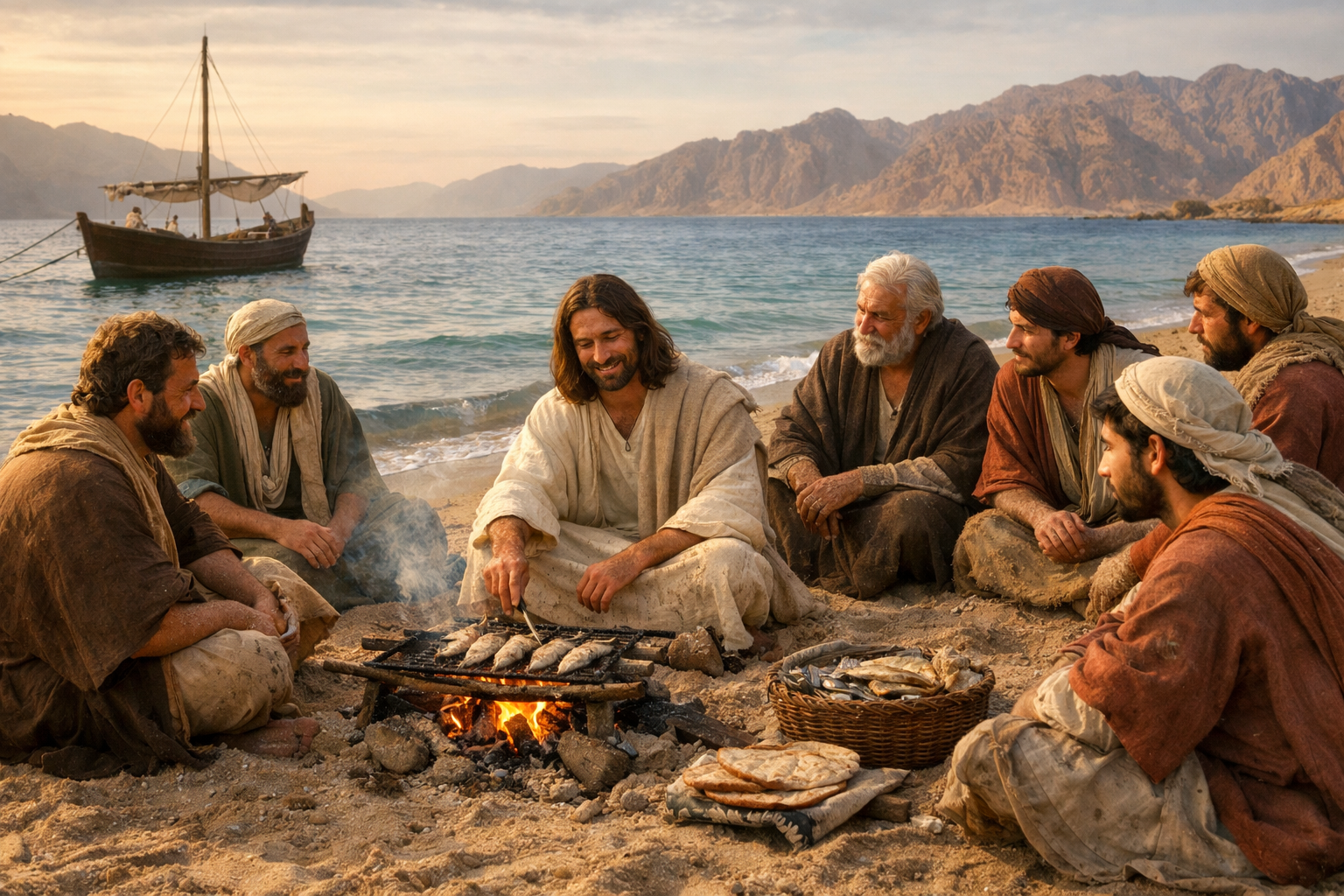
As church historians remind us, these first witnesses did not become courageous just because they discovered a new idea; they were changed because they were convinced they had truly met the living Christ, and many were willing to give their lives rather than deny that hope.
We're reminded that people who have seen and now speak are not just for the apostles. All through Scripture, God delights in trusting ordinary, unlikely people: Abraham and Sarah longing for a child, hesitant Moses, Rahab in Jericho, and Mary in Nazareth.
In that same way, Jesus trusts His church, including us, to share the good news of His resurrection. The very fact that the church has endured for twenty centuries is itself a miracle of witness, as scholars like Scott Hoezee note (Center for Excellence in Preaching).
Our calling is not to be perfect experts, but to be honest, humble witnesses to what the risen Lord has done.

So, if you are reading this and you’re unsure about faith, you are already standing right where Cornelius once stood, listening as a follower of Jesus says, “We are witnesses.”
And if you are already a Christian, this passage encourages you that your life is not meant to play out in silence.
You, too, are invited to stand with Peter in that simple confession: we have seen more of Christ than we ever expected and now we are called to speak.
How Easter Moves from One Empty Tomb into our Everyday Lives
Easter is not only a beautiful miracle at one empty tomb; it is the beginning of God’s new creation that still reaches into everyday lives. The resurrection of Jesus is the “firstfruits” of a great harvest that includes all who trust Him, reshaping our days, our habits, and our hopes even now.
We are invited to walk with Mary Magdalene to the tomb in John 20. Mary comes expecting one thing: a body to honor with spices. That is what her experience and history had taught her.
Israel had known prophets like Isaiah, Jeremiah, and many faithful ones who suffered and died. Bodies went into tombs and stayed there. There were no banners, no flowers, no celebration, only grief, respect, and very modest expectations.
But when Mary reaches the tomb, she finds a world turned upside down. What she expects to see, the body of Jesus, is not there. What she never expected to see, angels, and above all, a risen Jesus, is suddenly right in front of her.

Like many of the first witnesses, Mary is confused before she is comforted and joyful. The Gospels are very honest about this: no one went to the tomb that morning expecting resurrection. They did not come with celebration; they came with burial spices and heavy hearts.
From that quiet, confusing morning, the risen Jesus begins to show Himself again and again to both individuals and groups.
The New Testament tells us of at least ten of these appearances: to Mary Magdalene, to the other women, to Peter, to two travelers on the road to Emmaus, to the disciples in a locked room, to Thomas a week later, to seven disciples by the sea in Galilee, to more than 500 believers at once, to His brother James, and finally to the gathered disciples before His ascension.
Acts 1:3 explains that over forty days He gave them “many convincing proofs,” speaking with them about the kingdom of God. One study on Acts 10 notes that this is no accident: the pattern is deliberate—resurrection, appearances, teaching, and then the gift of the Spirit—so that the life of the risen Jesus can be carried into new hearts and new communities (Bible Hub).

In 1 Corinthians 15, Paul calls Jesus “the firstfruits of those who have fallen asleep.” Firstfruits are both a preview and a promise: if the first sheaf is ripe and good, you know a whole harvest is on the way.
In the same way, Easter is far more than a sentimental one-day remembrance. As Fr. Christopher puts it, it is the “big bang of the age to come.” The life of the world that is coming has already begun to break into this world in the risen body of Christ, and that new life is still spreading wherever He is at work.
This is why Fr. Christopher can playfully joke about “Easter weight”: for fifty days until Pentecost, “all the weight you lost during Lent, you must gain it back plus more.” It is a lighthearted way to say that resurrection faith is not thin, anxious, or stingy. It rests in the promise that, because Christ is risen and reigning, “your labor in the Lord is not in vain” (1 Corinthians 15:58).
Even the chocolate tucked away in a drawer no longer has to be guarded as if scarcity rules everything; the Lord of new creation is deeply generous. Simple, everyday practices such as sharing meals, keeping promises, comforting those who grieve, and baptizing new believers become places where the risen Jesus shows that He still cares for this world and still has good plans for it.
So how does Easter touch your own everyday life? It can look like facing grief with a quiet, steady hope that death does not get the final word, like when we remember a parishioner who has died and can still say, “that’s okay because Christ has also died.” It can look like celebrating new life in baptism and saying, “that’s good because Christ is also risen.”
And it can look like you, right now, hearing the promise of Romans 10:9: “If you declare with your mouth, ‘Jesus is Lord,’ and believe in your heart that God raised Him from the dead, you will be saved.”
Easter is not only Jesus’ story; by God’s grace, it can become your story too.
Saying with Peter and Cornelius, “We are Witnesses” Today
To say “We are witnesses” today is to trust that the same living Christ Peter spoke about in Cornelius’ home is here by His Spirit now shaping lives, churches, and neighborhoods, and to be willing to share your part of that story and welcome others into it.
In Acts 10, something beautiful happens while Peter is still speaking. As he shares the Easter story that Jesus lived, died, was raised, and now rules as judge of the living and the dead, the Holy Spirit suddenly comes upon Cornelius and everyone in his household.
Promises people thought were only for “the last day” begin to take root right there in a Gentile living room.
Without an altar call or a carefully planned service, the risen Christ claims these listeners as His own. Peter’s response is to baptize them and, just as importantly, to stay and share a meal. What once separated Jew and Gentile, clean and unclean, begins to give way to a shared family table.

This is still what the risen Lord loves to do. From the first century until today, pastors and historians have noticed the same pattern: people encounter Christ through Scripture, in worship, or through the quiet faith of a friend. They begin to sense His presence. Their priorities slowly change. Forgiveness starts to soften bitterness. Courage begins to nudge fear aside.
One modern Easter sermon on Acts 10 describes it this way: “The power of the new life that was unleashed in this world by Jesus’ resurrection is still working to transform our hearts and lives today” (Logos Sermons).
This is not about becoming a flawless spokesperson for Christianity. It is about becoming an honest signpost that points to Jesus. Picture Christ’s people as part of a great harvest, thirtyfold, sixtyfold, a hundredfold.
Jesus is not a fading figure on a farewell tour; He is the Lord who “plans to be here forever,” ruling over all things. He still leans into our communities as though He truly wills their good, still caring about our cities, our schools, and our families.

So, what might it mean for you, personally, to say, “I am a witness?” It often begins in very simple ways.
It could mean naming a moment when you sensed God’s care at a time you felt overlooked. It might mean admitting that you once wrote all of this off as make‑believe, but something about Jesus’ cross and resurrection has started to unsettle your certainty. It may mean sharing how Christ met you in addiction, in anxiety, in grief, and gently began leading you toward freedom.
Witnesses do not draw attention to themselves; they point, again and again, to the One who is alive.
And this points to one very simple, practical next step: take some time to watch the full sermon this article is based on. Perhaps sometime this week, set aside a quiet moment to sit with the Easter story as it is preached, not only read, and to pray, even softly, “Lord Jesus, if You are alive, would You make that real to me?”
Whether you come to this from years of faith or from a friend’s gentle invitation, the invitation is the same. The Jesus who stepped out of the tomb, who met Mary in her tears, who sent Peter to Cornelius’ house, and who has carried His church through the centuries, is still drawing people to Himself.
We are witnesses. And by God’s grace, you can be one too.
Listen to the Full Sermon
Support the Mission
Help support the church's mission by clicking the Donate button below.