
When Jesus’ Teaching Feels Too Hard (John 6 and Your Doubts)
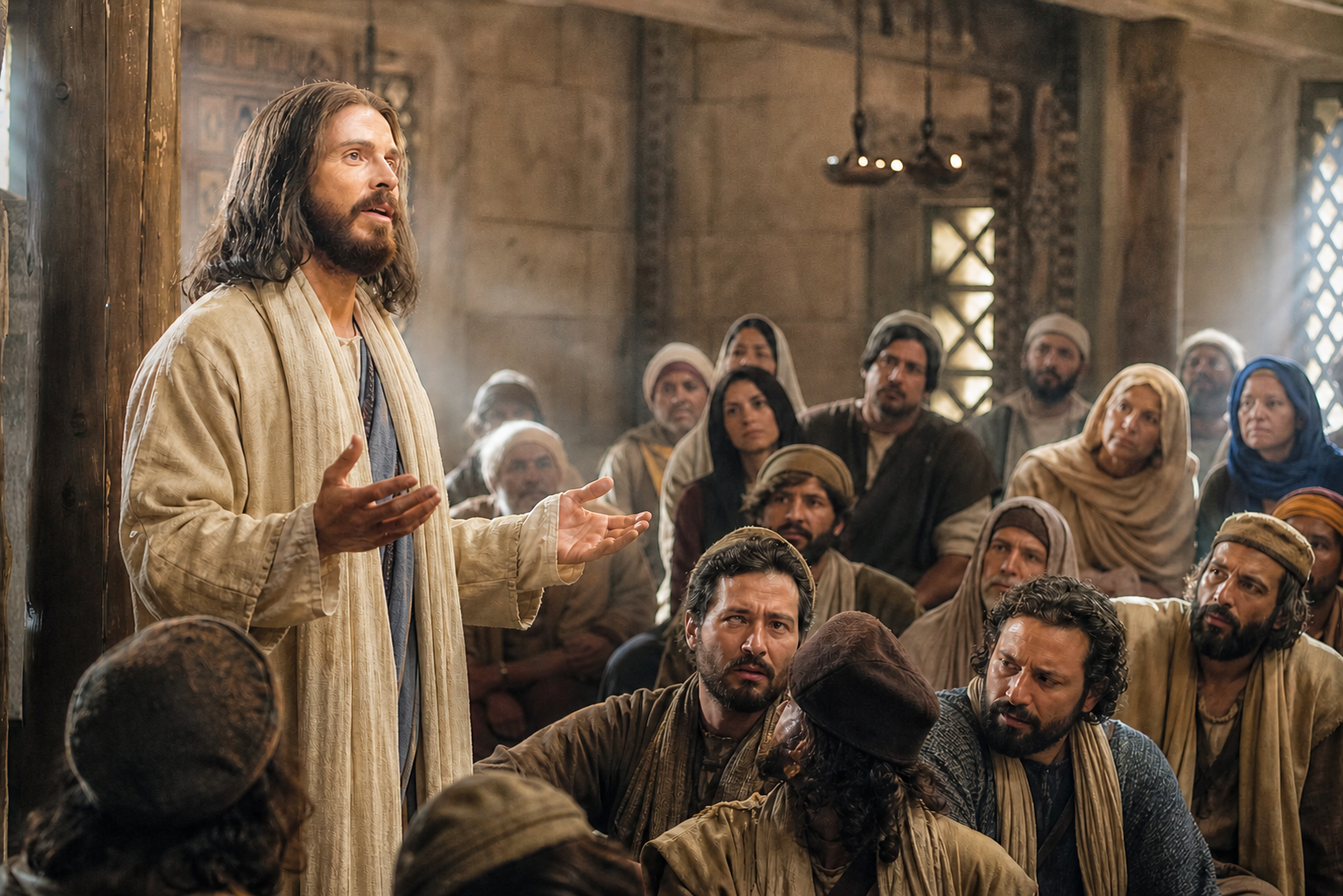
Exploring Honest Questions About Faith In chapter 6 of the book of John, we meet many people who are struggling to make sense of Jesus’ words, “I am the bread of life” (John 6:35). The setting is not a quiet retreat but a packed synagogue in Capernaum. Thousands have followed Jesus after the feeding of the 5,000. They’ve seen the miracle of the loaves and fish multiplied, heard about the storm stilled, and now gather to hear Jesus, bringing their curiosity and questions with them. We may recognize something of ourselves in that crowd. Maybe you’re just getting to know Jesus, working through hurt from a previous church, or hoping to find a community where you can belong. John 6 makes room for honest questions without pretending the answers are easy, and it doesn’t hide the painful reality that some people walk away.
Read MoreFeeding the 5,000: Trusting Jesus With What You Have
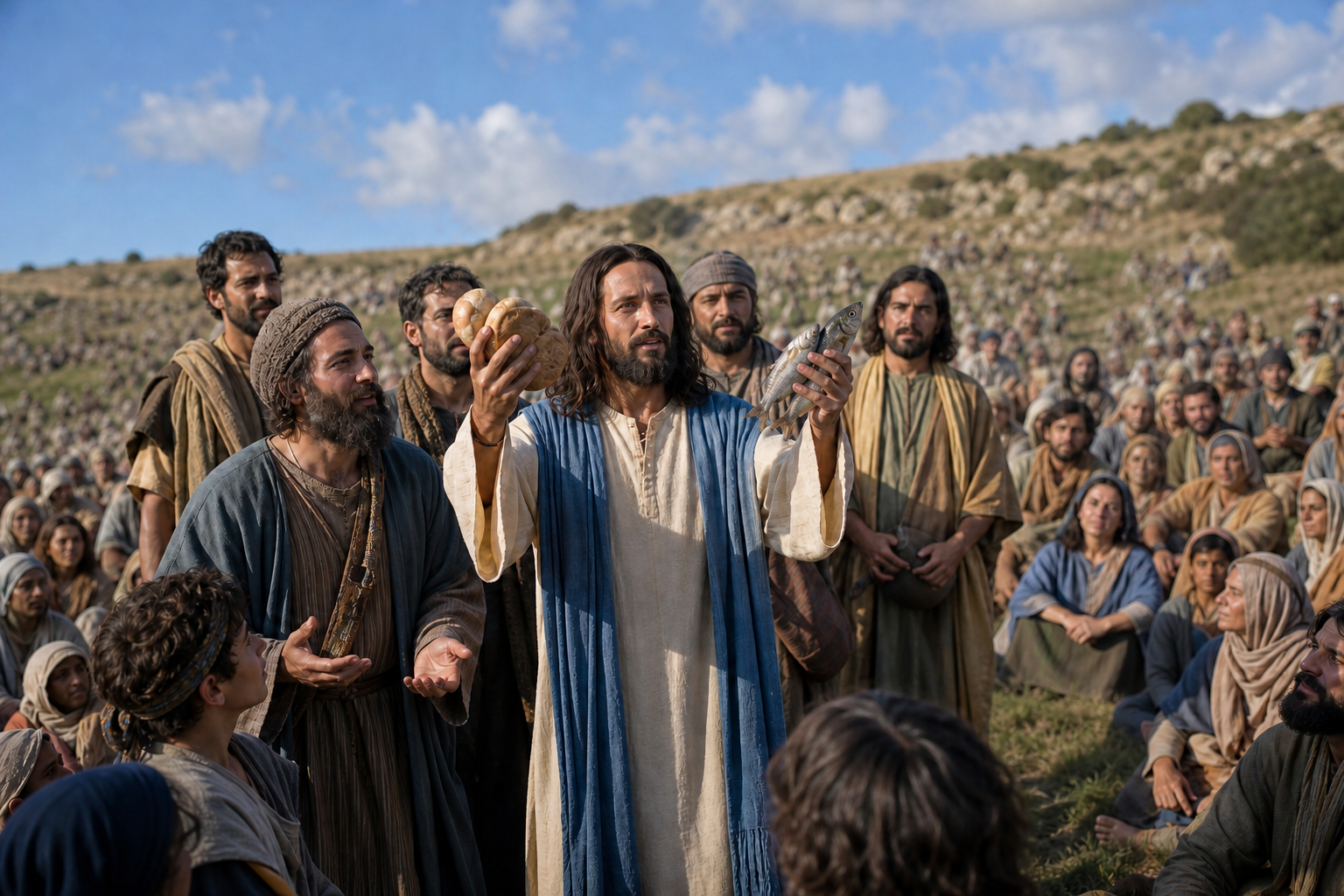
Have you ever looked at your own version of five loaves and two fish (from the feeding of the 5,000 in John 6) and thought, “How could this possibly be enough?” Most of us have been there. Whether it’s a tight budget, low energy, a distracted mind, or hope that feels a little worn, the needs in front of us can seem bigger than what we have to offer. If that sounds familiar, you’re not alone. The story in John 6 invites us to bring that feeling with us as we discover what Jesus does with what seems too small.
Read MoreJesus Walks on Water: The Fierce and Tender God Near You
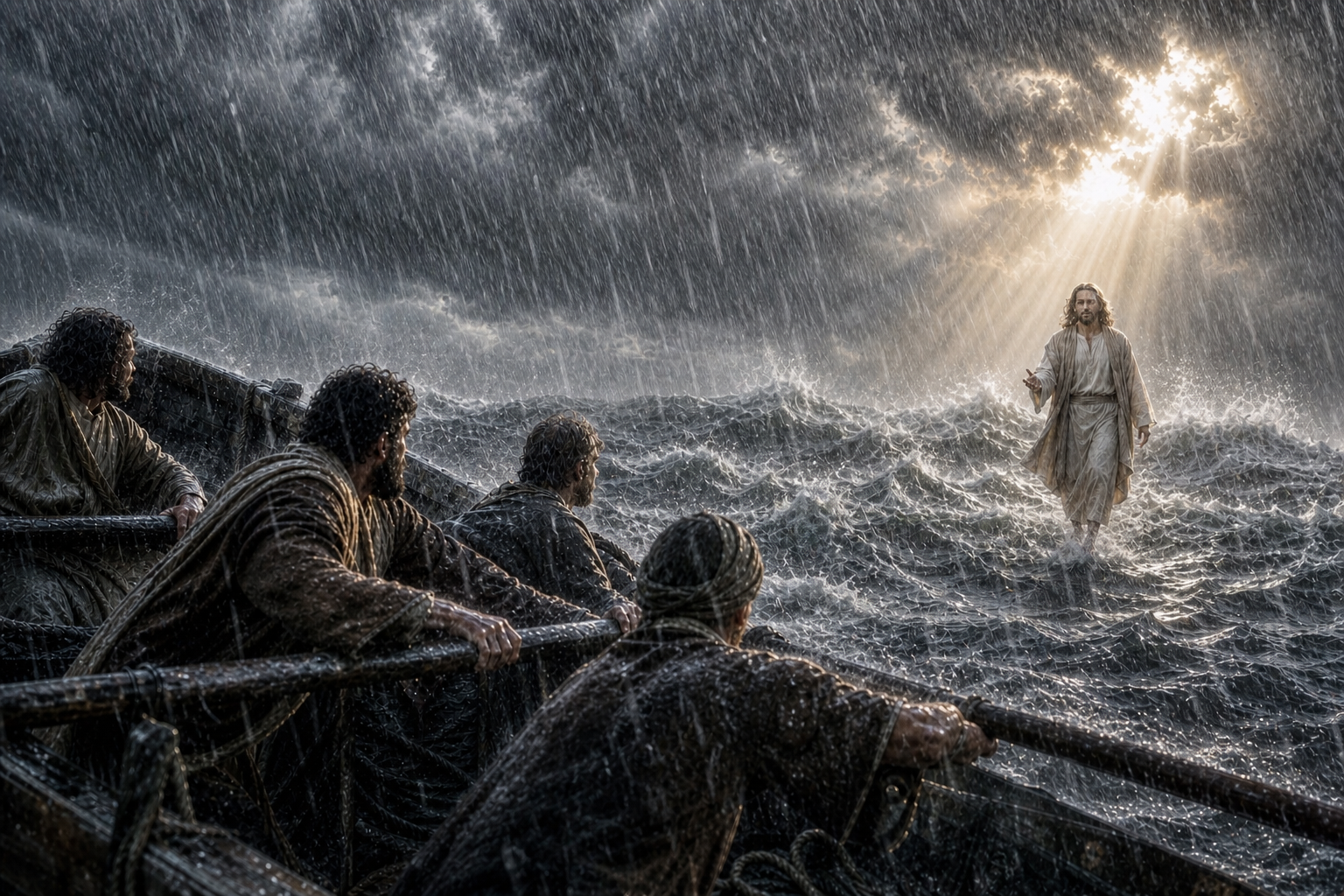
When Jesus Walks Into the Middle of Your Storm When Jesus walks on water, John invites us to see more than an astonishing sign. The same God who brought order to the chaotic waters in Genesis comes close when your own life feels stormy. He meets you in the darkness with these reassuring words: “It is I; do not be afraid” (John 6:20). At first glance, this part of John 6 feels like a simple journey from one place to another. Jesus has just fed thousands, and soon He will teach that He is the Bread of Life. For now, the disciples just need to cross the Sea of Galilee. But even an ordinary trip can become a moment of discovering who Jesus is.
Read MoreTaking Jesus at His Word in Your Crisis Today
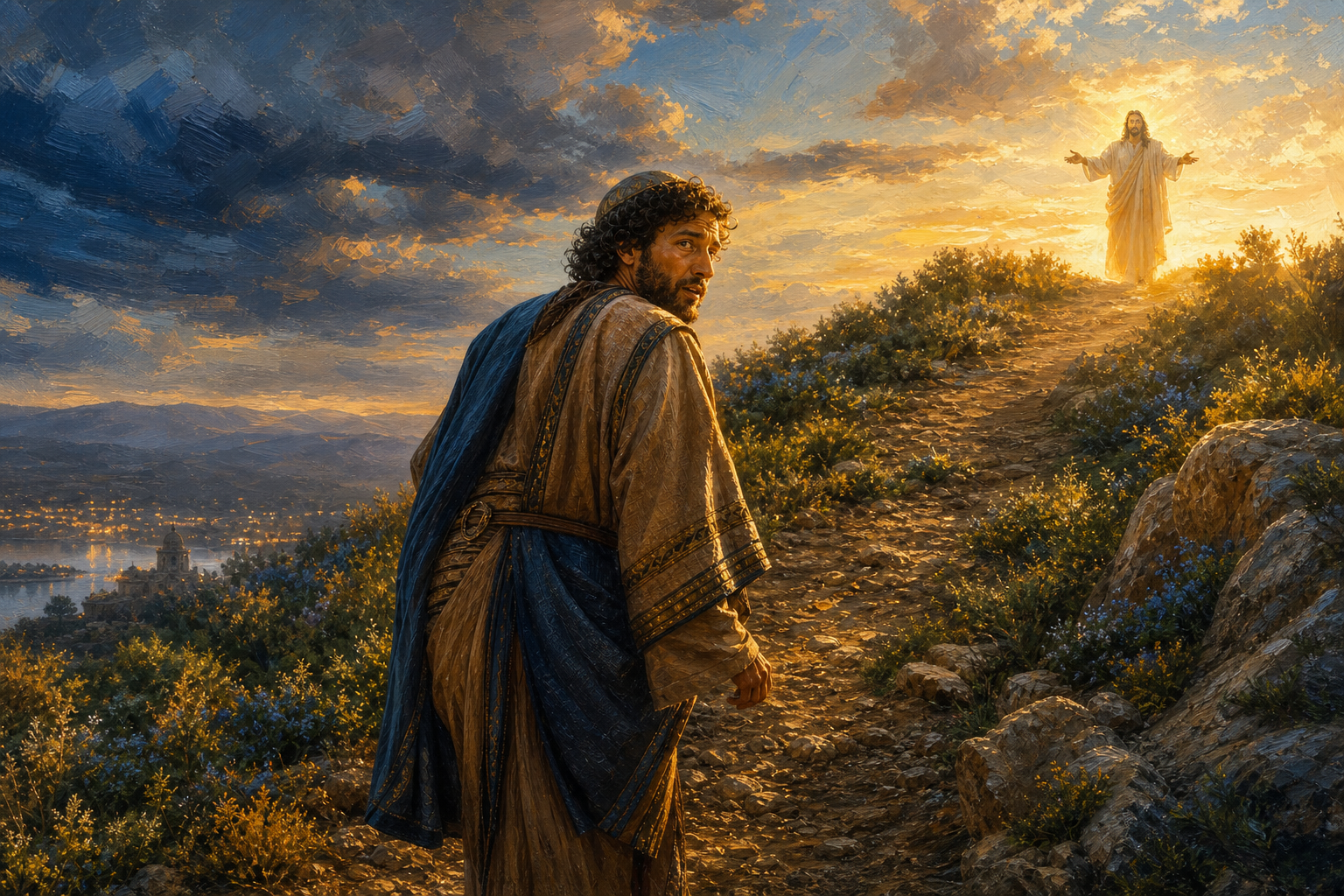
Some Bible stories feel distant, like they belong in another world. John 4:43–54 isn’t one of them. A parent races to Jesus because his child is dying. Words are spoken, a choice is made, and everything changes. That same choice still stands in front of us today. From Admirer to Believer: Why John 4 Still Matters The royal official in John 4 shows us what it looks like to take Jesus at His word in the middle of real life. He travels miles uphill, leaves his dying child behind, and entrusts his whole future to one sentence from Jesus: “Go… your son will live.” In that sense, his decision is not so different from ours. We are still invited to trust Jesus before we can see how the story will end. John tells us exactly why he included stories like this: “These are written that you may believe… and that by believing you may have life” (John 20:31). He is not simply passing along interesting signs or bits of miracle trivia. He is helping us see the difference between admiring Jesus from a distance and trusting Him enough to build our lives on His promises.
Read MoreWhen Religion Gets in the Way of Jesus
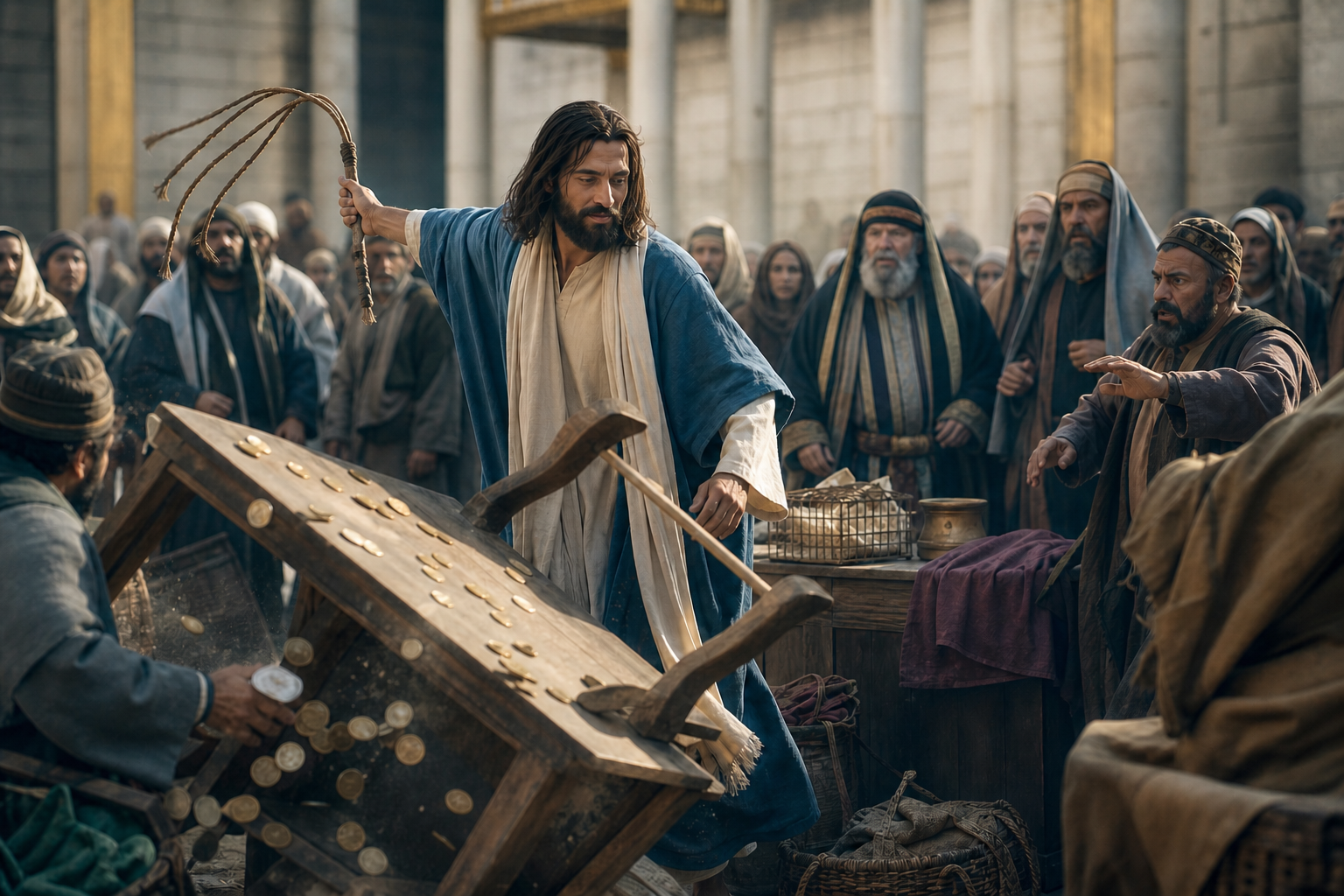
When Religion Becomes a Barrier Instead of a Bridge to God When religion gets in the way of faith, it usually happens quietly: church becomes routine, pain from past hypocrisy lingers, and the noise of spiritual activity drowns out a living relationship with Jesus himself. Many people don’t leave faith overnight; they slowly drift when religion feels busy but empty. You can see this all around us. Recent studies suggest that around 40 million Americans have stopped attending church in the last few decades, a shift some researchers now call “the Great Dechurching” (ChurchLeaders). Another study found that 64% of young adults who grew up in church withdrew from regular involvement as adults (Answered Faith). Many of them will tell you they didn’t stop believing overnight; they just stopped seeing how church connected to real life.
Read MoreGospel of John: Written So You Can Believe and Live

Why John Wrote His Gospel The Gospel of John was written to help you see who Jesus really is, trust Him, and begin to experience the true life found in His name. John carefully selected a few of Jesus’ signs, like turning water into wine and raising Lazarus, so that people with real questions and shaky faith could come to know Him with deeper trust and confidence. Near the end of his book, John pulls back the curtain and tells us exactly what he’s doing. In John 20:30–31 he writes, “Jesus performed many other signs in the presence of his disciples, which are not recorded in this book. But these are written that you may believe that Jesus is the Messiah, the Son of God, and that by believing you may have life in his name.” Think about that for a moment. John is not trying to give us a full biography of Jesus. He knows he is being selective. In fact, he says that if everything Jesus did were written down, the whole world wouldn’t have room for all the books. Instead, John is carefully sharing the stories that matter most for one clear reason: to lead you to Jesus and into life.
Read MoreMy Grace Is Sufficient: Finding Strength in Your Weakness

What ‘My Grace Is Sufficient for You’ Really Means Today When Paul heard Jesus say, “My grace is sufficient for you,” he received a promise that reaches far beyond simply making it through. God was reminding him, and us, that His presence, power, and favor are already enough for every burden we carry, even when the thorn remains. We do not have to pretend we are strong on our own; when we bring our weakness to Him, His power shines through in beautiful ways. As we read 2 Corinthians 12:7–10, we see Paul honestly share his deep pain. Three times, he asks the Lord to take away his mysterious “thorn in the flesh.” God does answer, though not in the way Paul expects. Rather than removing the problem, Jesus offers him an even greater promise: “My grace is sufficient for you, for my power is made perfect in weakness.”
Read MoreUnforgettable Glory: How the Transfiguration Shapes Life

Unforgettable Glory: Why the Transfiguration Still Matters The transfiguration of Jesus reminds us that Christian faith is grounded in something real, not just an inspiring story. In 2 Peter 1:16–18, Peter says he personally saw Christ’s glory and heard the Father’s voice. That means ordinary believers like us can build our lives on something solid, even when life feels unsteady. When Peter writes these words, he seems to be near the end of his ministry and likely facing death under Roman rule. But what stands out is that his focus is not on protecting himself. He is thinking about us. In 2 Peter 1:12–15, he wants to keep reminding believers of the truth so they can hold onto it even after he is gone. That picture feels familiar because we forget so easily.
Read MoreRight Hand of God: What It Means for Your Life Today

What the Bible Means by the Right Hand of God The right hand of God gives us a beautiful picture of his power, care, and presence, all centered on Jesus. It shows us where Jesus is right now, honored, exalted, and still at work for his people, so you can live each day knowing you are never alone and never forgotten. In John 5:39, Jesus says, “Search the Scriptures…they are they which testify of me.” And when you follow the phrase “right hand of God” through the Bible, which is more than fifty times, you start to see that it keeps leading you back to Jesus. Scripture is not inviting us into random facts or Bible trivia. It is inviting us to know him personally.
Read MoreGod’s Presence in Exile: Hope for a Deceitful Heart

Walking with God may not feel easy or straightforward. Many of us feel more like we’re living in exile, facing job loss, hard diagnoses, strained relationships, or prayers that seem to go unanswered. If your heart feels worn out, weighed down, or even a bit numb, take heart. This message from Jeremiah, Lamentations, and the story of exile is God’s word of hope spoken right into your wilderness. When Your Heart Feels Beyond Repair: God’s Presence in Exile When life seems to fall apart, it can feel like God has abandoned you. But the story of Judah’s exile reminds us that God’s presence can actually shine most clearly when every false comfort is gone. In love, He exposes the “broken cisterns” we cling to, not to embarrass us, but to welcome us back to Himself, the true living water.
Read More